
Certified!
Mangosteen season, a BIG credentialing update, and a very lovely chair-based flow.

Your girl is officially Accessible Yoga certified!!!
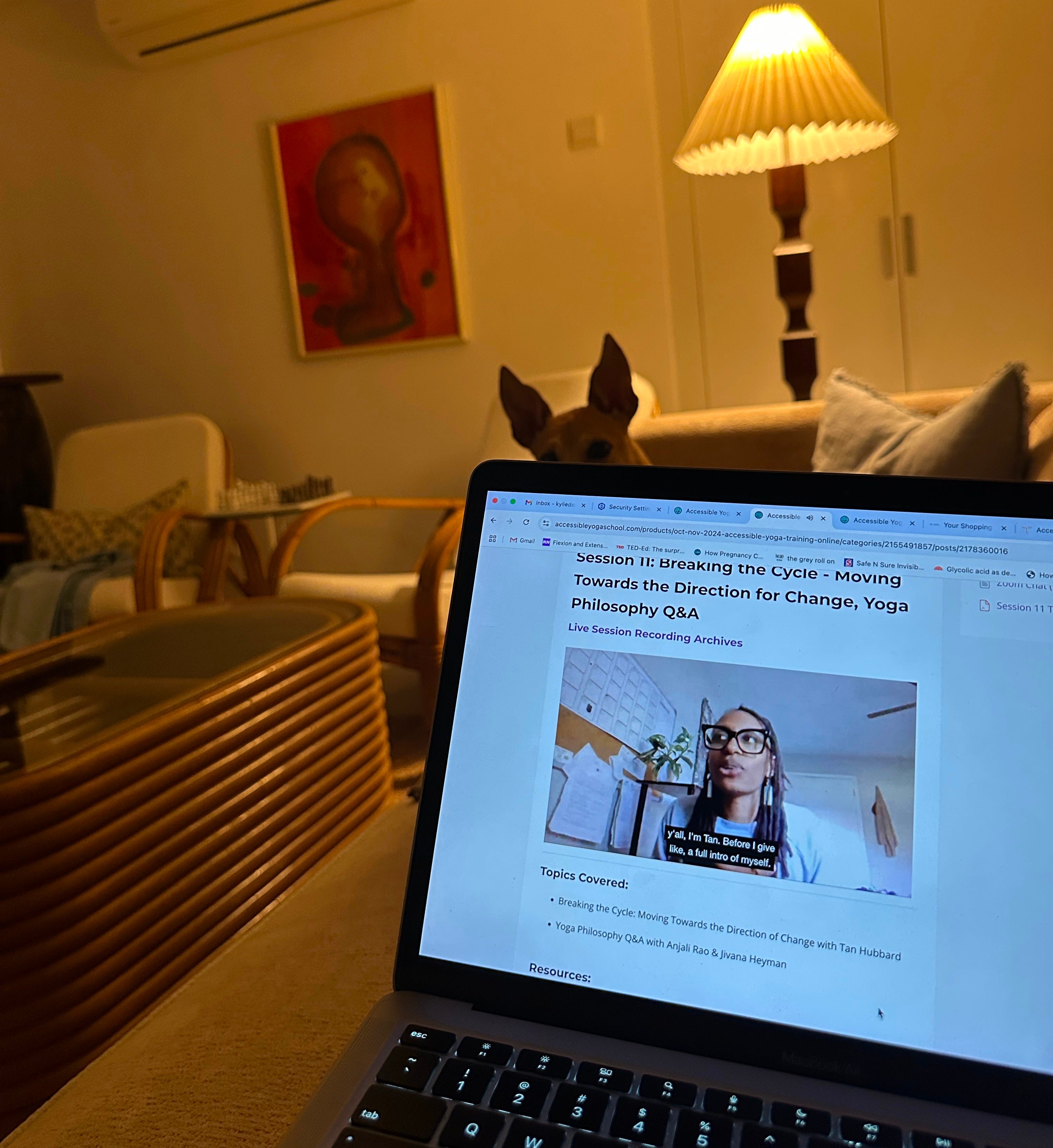
I’ve been a little quiet on here this past week because I’ve been hunkered down in “study mode”, completing my certification with the Accessible Yoga (AY) School1.
In honour of this new notch on my teaching belt, I thought I’d share a little bit about this training and also share my chair-flow that I submitted as my final project (to give you some flow inspo).

It’s been a long time since I had the pleasure of attending a yoga teacher training as a student. I’d had my eye on the AY training for a while so when the opportunity to learn from Jivana Heyman and the Accessible Yoga School presented itself, I enrolled immediately.
I’ve read (and loved) several of Jivana’s books and if you’ve trained with me recently, you likely have too—this one is now a required text in my philosophy reading list.
I actually bought the AY training months ago but waited until I had a proper break in my schedule so that I could spend a good few days really immersing in the course content. With only a few weeks left(!!) until I dive back into teaching (more on that soon, I promise!!), the timing could not have been more perfect.
Not only did this training provide skills-based knowledge (ie: how to plan classes and adapt traditional yoga postures for practitioners with disabilities, neurodivergence, chronic pain, trauma conditions, signs of ageing, etc.) but it also featured lectures on philosophy and social justice that low-key made me feel like I was back in uni again (in the best way!!).

There were many things that I appreciated about this training but here are a few major loves:
HOLDING AN OPEN SPACE FOR QUESTIONS, LEARNING + (UNLEARNING)
As a yoga teacher trainer, I am a BIG proponent of asking ALL the questions because it’s how many of us learn and SO often, one person’s question is something that the rest of the group is curious about too (but too shy to ask).
The AY course content discussed systems of oppression that make yoga inaccessible to many people, things like: racism, ableism, ageism, fatphobia, classism, cisheterosexism, etc.2. These are big topics and, for some folks, this was the first time that they were hearing/learning about them so naturally, it brought up some questions!
In the day and age of “cancel culture” it can feel really intimidating to ask questions about these topics for fear of (inadvertently) offending someone. The training facilitators were so wonderful in recognising this and handling each discussion with patience often reminding participants that the training is meant to be a learning space and questions are welcome/encouraged. I really believe that environments like this are where real learning (and unlearning) happens, so that was really inspiring to see.
DISCUSSING THE LINK BETWEEN YOGA AND SOCIAL JUSTICE
This is a question that I get literally every time I teach a yoga teacher training especially with everything that is going on in the world currently. A lot of yoga practitioners have a hard time reconciling the philosophy of yoga (which contains tenets of non-harm, introspection, acceptance), with fighting for social justice.
That confusion makes sense because a lot of the yoga that we see today in the mainstream media is a hyper-individualistic interpretation of the practice. It’s this "working on the self for the self” or “you do you, I’ll do me” mentality which is problematic when we live in a world that makes it very hard for some folks to “do” at all.
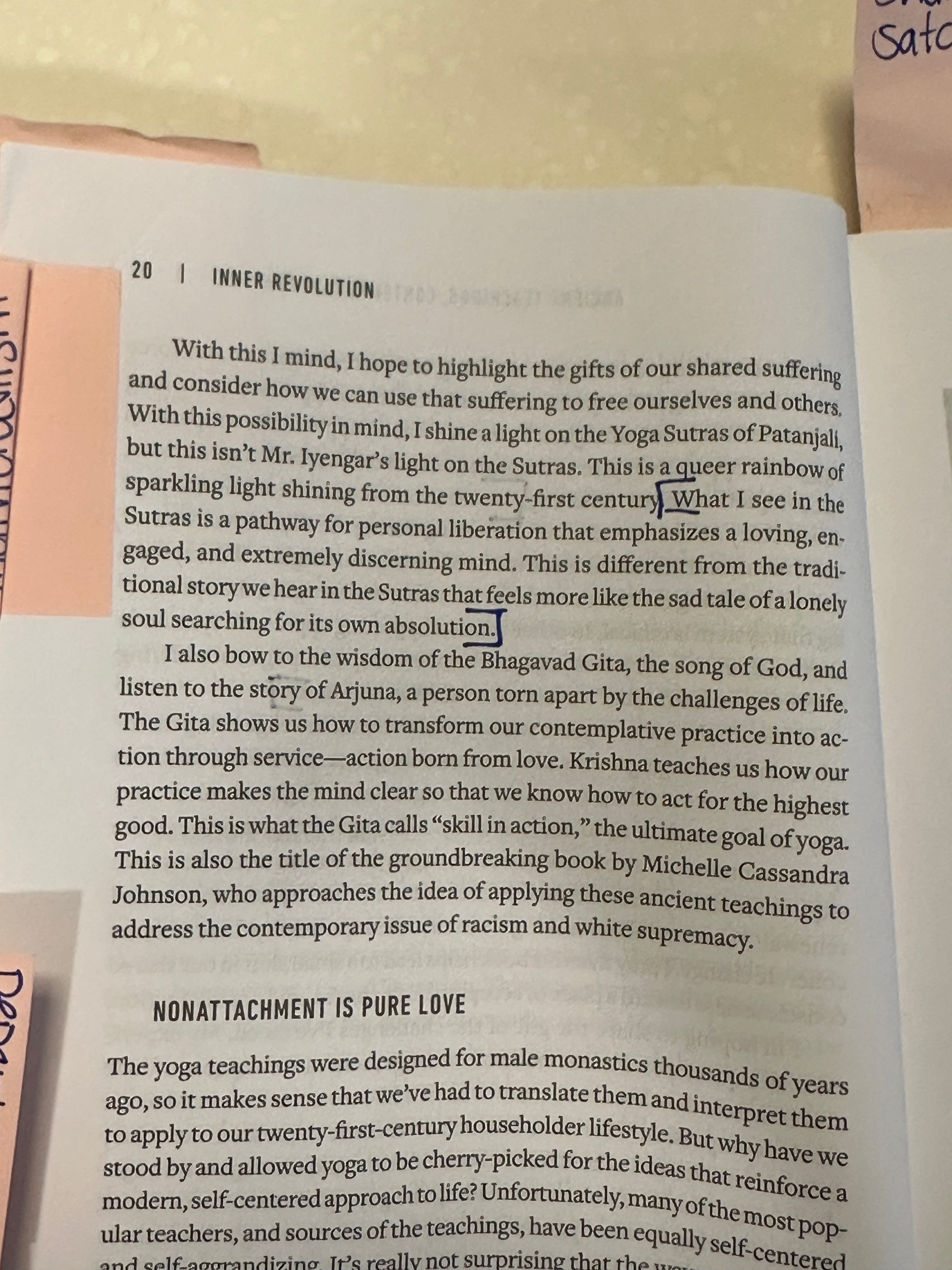
I love the way that Jivana interprets the yogic philosophy (from the Yoga Sutras and the Bhagavad Gita) in a way that emphasises the intersection of yoga and social justice to suggest that our individual spiritual liberation is tied to the collective’s liberation. In other words: none of us can be spiritually free until we all are. Our inner spiritual work, is not different/separate from the work that we have to do as humans. This is a much more community-oriented approach rooted in helping one another.
SAFETY MEASURES WITHOUT FEAR MONGERING
Nothing gives me the ick like fear-based teaching, AKA: “Don’t do this, you might injure yourself”, “Don’t teach those movements, your student will get injured”, “It’s dangerous for students with that condition to do those postures”.
Ideally, we want to our students explore postures that are safe and supportive for their body without making them fearful of moving their body. And that can be a fine line.
I’ve always felt like the predominant method of memorising an infinite list of medical conditions/diseases/disabilities and then eliminating contraindicative movements from the yoga sequence to be overwhelming and even a bit presumptuous. All bodies are different and will experience things in different ways (ie: what is true for one person experiencing Multiple Sclerosis, may not be true for another person with MS) and our approach as teachers should honour that.
I loved that the AY course avoided fear mongering when providing practical safety training (eg: how to prevent falls with ageing populations, risks for folks undergoing chemotherapy, movements that have the potential to induce stroke, etc.) and advocated for a client-first approach3.
Final Thoughts
This training, in many ways, was both personal and practical for me. I work mostly with adults of middle age and older my private teaching practice. I’m glad that I now have more ways to continue offering them a fulfilling movement practice as they age.
For the past year I’ve also been working 1:1 with both of my parents each week rehabbing injuries and mobility issues. It makes me really happy to see their progress, and knowing that I have the tools to continue to offer them a safe and supportive movement practice as they age is such a comfort.
Most of all, I love that my teaching practice is not an ableist one—it is not dependent on my student (or myself) being able-bodied. One of the lecturers in the training started off their presentation with a question that’s really stuck with me, it was: who is affected by disability?
The answer? Everyone.
Everyone at some point will be affected by a disability whether personally or in their family, friend group, etc. It was such a powerful reminder that this skillset is not “niche”. There is a tremendous need for more accessible yoga in this world.
Lastly, it was really refreshing to be in a learning space that refused to spiritually bypass the inequality and suffering that exists in our world4. This is the first time that I’ve attended a yoga teacher training where conversations about oppression and social justice have been prioritised in the course curriculum which is wild because the inequality that we see in our world is replicated in many yoga spaces. In order for this to change, it first needs to be acknowledged. So the importance of these conversations cannot be overstated.
The Chair Flow that I Submitted as My Final Project
In order to graduate we were asked to submit an accessible yoga class for peer review. My submission was a chair yoga class. This was a real class that I prepared for a private client who'd undergone two simultaneous surgeries (1x ankle and 1x wrist) both of which demanded 4-6 weeks sans weight-bearing.
My client is an older adult who is very active. They love hiking and Yoga (they've been practicing Iyengar Yoga consistently for 30 years!). So, as you might imagine, being sedentary for this recovery was enormously challenging for them (physically and emotionally).
Our twice-weekly classes were held in their home-space. The sequence focused on building strength in the muscles that would be required to support them during their recovery (they eventually moved to crutches/walker) as well as improving mobility and circulation.
If you’re a member of THE EMPOWERED YOGA TEACHER you’ll note that I planned this class using the exact same sequencing template that I teach in THE EMPOWERED YOGA TEACHER resource. I’m not kidding when I tell you that it can be used to plan literally ANY kind of class (personally, universal application is how I know a template is *good*).